
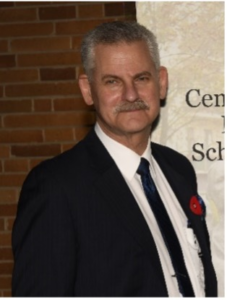
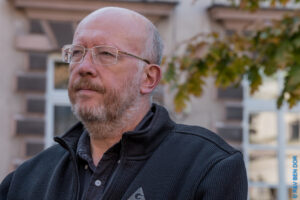
Professor Jan Grabowski in conversation with CHES member Laurence Wall. Professor Grabowski is a Polish-Canadian professor of history at the University of Ottawa who specialises in Jewish-Polish relations in German-occupied Poland during World War II and the Holocaust in Poland.
What has changed for Holocaust scholars such as yourself in the wake of October 7th?
Let me start on a personal note. Professor Konrad Kwiet is a Holocaust survivor and the most respected and celebrated historian of the Shoah in Australia. In the aftermath of the Bondi Beach massacre, he wrote to me:
“Dear Jan, I continue to say that the “Schonzeit”— the period of grace granted to Jews after Auschwitz—has come to an end”. This, I believe, would be the shortest, and most poignant answer to your question. Moreover, I would argue that Konrad Kwiet’s “Schonzeit” had come to an end even before October 7th, although few of us were aware of it at the time.
The slaughter of Israeli civilians, of Jews, on October 7th not only reshaped political realities in the Middle East but has also reverberated across academic fields concerned with Jewish history, antisemitism, and the Holocaust. For Holocaust scholars, the aftermath has not introduced an entirely new set of questions so much as it has intensified, reframed, and, in some cases, destabilized existing ones. The changes are methodological, ethical, and institutional.
One of the most immediate shifts has been the collapse of a long-assumed temporal and moral distance between the Holocaust and the present. For decades, Holocaust scholarship operated with a tacit understanding that the Shoah belonged to a closed historical chapter—exceptional, foundational, but ultimately past. October 7th challenged that premise. The mass killing of Jews explicitly as Jews, accompanied by celebratory rhetoric and the circulation of atrocity imagery, has forced scholars to confront the persistence—not merely the memory—of genocidal antisemitism. This has blurred the line between historian and witness. Scholars accustomed to analysing perpetrator language and victim testimony as archival material suddenly encountered similar discourses in real time, often on social media platforms that demand immediate response rather than reflective distance.
This has led to a second shift: the destabilization of analytical frameworks used to compare the Holocaust with other instances of mass violence. The field has long been divided between “uniqueness” and “comparative genocide” approaches. In the wake of October 7th, these debates have taken on renewed urgency and, at times, polemical sharpness. Some scholars see in the attacks echoes of earlier pogroms and even genocidal intent, while others caution against what they perceive as the inflationary use of Holocaust analogies. The result has not been a resolution but rather a heightened awareness of the political stakes embedded in scholarly language. Terms such as “genocide,” “pogrom,” and even “Holocaust” itself are now recognized not only as analytical categories, but as interventions in contemporary moral and political struggles.
A third transformation concerns the study of antisemitism. October 7th and its aftermath have exposed deep fissures in how antisemitism is conceptualized within academia, particularly in relation to anti-Zionism. Holocaust scholars, many of whom had already engaged with the longue durée of antisemitic ideologies, now find themselves drawn into contentious debates about whether and how certain forms of anti-Israel rhetoric reproduce older antisemitic tropes. The boundary between legitimate political critique and discriminatory discourse has become a central—and divisive—object of inquiry. This has also affected collaborations across fields such as postcolonial studies, where tensions have emerged over competing frameworks of victimhood, colonialism, and resistance.
Institutionally, the climate in universities has become more fraught. Holocaust scholars report increased pressure—from students, colleagues, and external actors—to take public positions. In some cases, classrooms have become sites of confrontation, where the teaching of the Holocaust is scrutinized for perceived political implications in the present. This has raised difficult questions about academic freedom, pedagogical responsibility, and the role of scholars as public intellectuals. The expectation of neutrality, never fully attainable, now appears even more untenable.
What has been the impact of the language used by pro-Palestinian demonstrators such as “genocide” and “Nazis” as applied to Israel’s actions in Gaza?
The use of terms like “genocide” and “Nazis” by some pro-Palestinian demonstrators to describe Israel’s actions in Gaza has had a significant impact on Holocaust scholarship—not because such language is entirely new, but because of the scale, visibility, and intensity with which it has entered public and academic discourse since October 2023.
First, it has sharpened long-standing debates about the analytical versus polemical use of historical vocabulary. Within the field of genocide studies, “genocide” is a term with a specific legal and historical definition rooted in the United Nations Genocide Convention. Holocaust scholars have traditionally approached it with methodological caution, aware of both its explanatory power and its susceptibility to political instrumentalization. The widespread application of the term to Gaza—often in activist contexts rather than juridical ones—has intensified concern that “genocide” is being used less as an analytical category and more as a moral accusation or mobilizing slogan. For some scholars, this risks diluting the term’s precision; for others, it reflects an attempt to apply universal lessons derived from the Holocaust to contemporary crises. The overuse —or abuse—of the term by several scholars such Raz Segal, Amos Goldberg or Omer Bartov exacerbated the divisions in the already deeply divided field of genocide and Holocaust studies.
The invocation of “Nazis” or direct Holocaust analogies has proven even more contentious. Comparing Israel or the Israeli army to Nazi perpetrators crosses the line which Holocaust historians consider a boundary of historical distortion. We call it today “Holocaust inversion”, and the fact that some eminent scholars subscribe to this terminology is deeply worrisome.
What do you think is the result when the Holocaust is routinely compared with modern events such as the war in Gaza rather than leaving it as a separate historical event?
The Holocaust, as a state-organized project of total annihilation, occupies a particular place in both historiography and memory culture. When demonstrators—or not infrequently academics—use Nazi analogies, scholars often see not just a flawed comparison but a collapse of historically specific categories into generalized symbols of evil. This has led to renewed efforts within the field to clarify what makes the Holocaust distinct—not necessarily to claim absolute uniqueness, but to insist on the integrity of historical context and proportionality in comparison.
Finally, the proliferation of this language has affected the public role of Holocaust scholars. Many feel compelled to intervene—through articles in newspapers, public statements, or postings in social media—to correct what they see as historical inaccuracies or moral confusions. Yet such interventions carry risks: they can be interpreted as political alignment rather than scholarly clarification, further entangling historians in polarized debates.
In sum, the impact of terms like “genocide” and “Nazis” in the context of Gaza has been to intensify core tensions within Holocaust scholarship: between precision and accessibility, comparison and specificity, scholarship and activism. It has not resolved these tensions, but it has made them far more visible—and far more difficult to ignore.